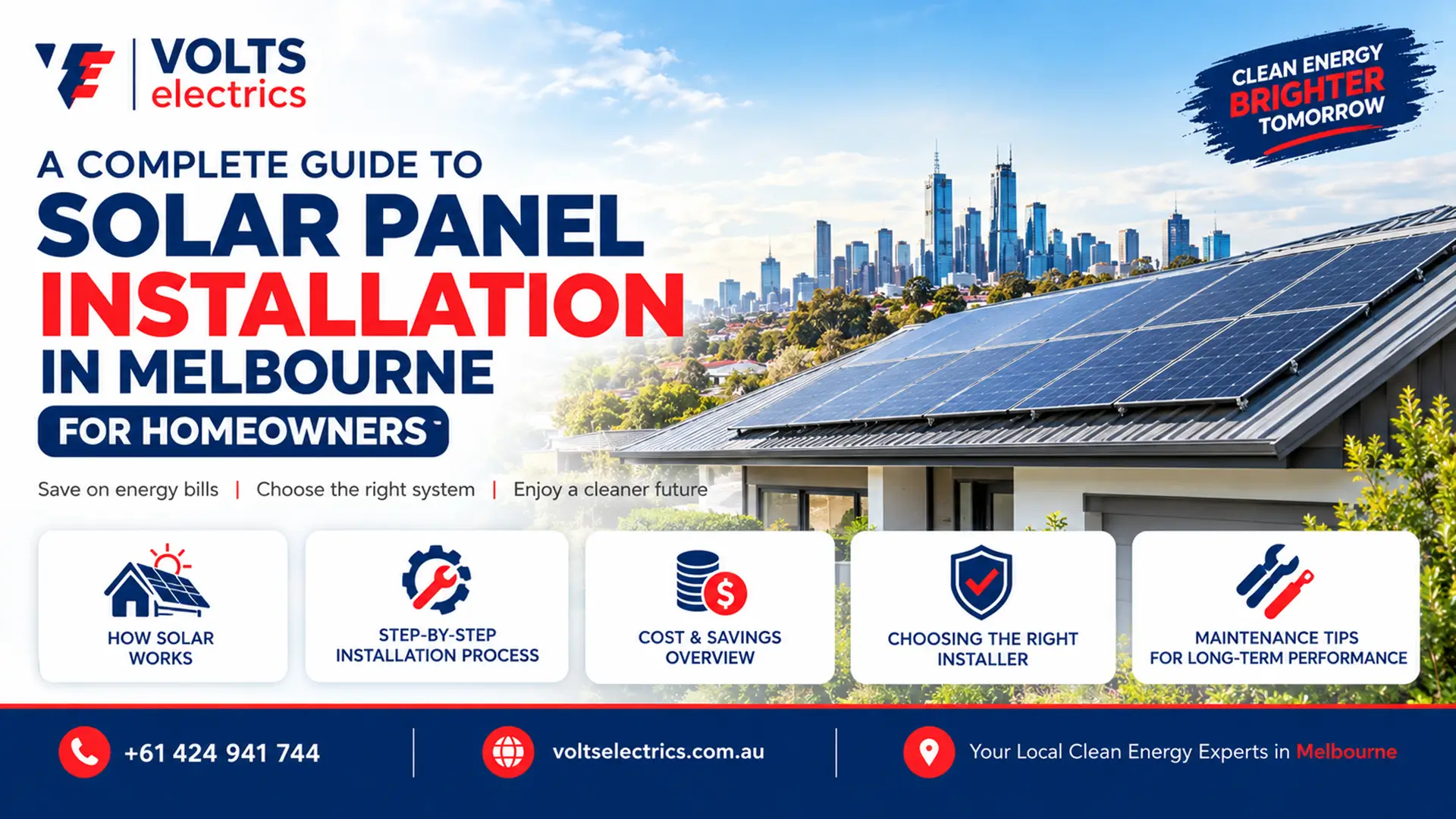

Solar energy is becoming a popular choice for Melbourne homeowners who want more control over their power costs. If you are thinking about solar panel installation in Melbourne, it helps to know how the process works from start to finish. Rising electricity bills and a growing interest in clean energy are two big reasons households are making the switch. This guide explains how solar works, how installation happens step by step, what affects the cost, and how to choose the right installer. Our aim at Volts Electrics is to help you understand your options clearly so you can decide with confidence.
A solar system converts sunlight into power that your household can use every day. For many Melbourne families, this brings both everyday savings and long-term benefits.
Whenever your panels are generating during daylight hours, your home draws less energy from the grid. This can lower your quarterly bills, especially if you use more energy while the sun is up. Over the years, these savings can add up. The exact amount depends on your usage, your system size and the way your household uses power.
With solar, you generate part of your own electricity instead of relying only on the grid. This gives you more control over your energy use and makes you less exposed to future changes in electricity rates. If you add a battery later, you can store extra solar power and use it in the evening. For more detail, see our guide on how to choose a solar battery in Melbourne.
Solar is a renewable, clean way to power your home. Every unit of electricity your panels produce is a unit that does not need to come from fossil fuels. For homeowners who care about reducing their carbon footprint, solar is one of the most practical steps they can take at home.
Before booking an installation, it helps to know what a home solar system includes and how it operates.
The panels on your roof absorb sunlight and convert it into direct current (DC) electricity. An inverter then converts this into alternating current (AC), which is the type of power your home appliances use. The electricity flows to your switchboard and powers your home first. Surplus electricity that you do not use can be exported to the grid.
A typical home solar system includes the following parts:
Each part plays a role in how well your system performs, so quality and correct installation both matter.
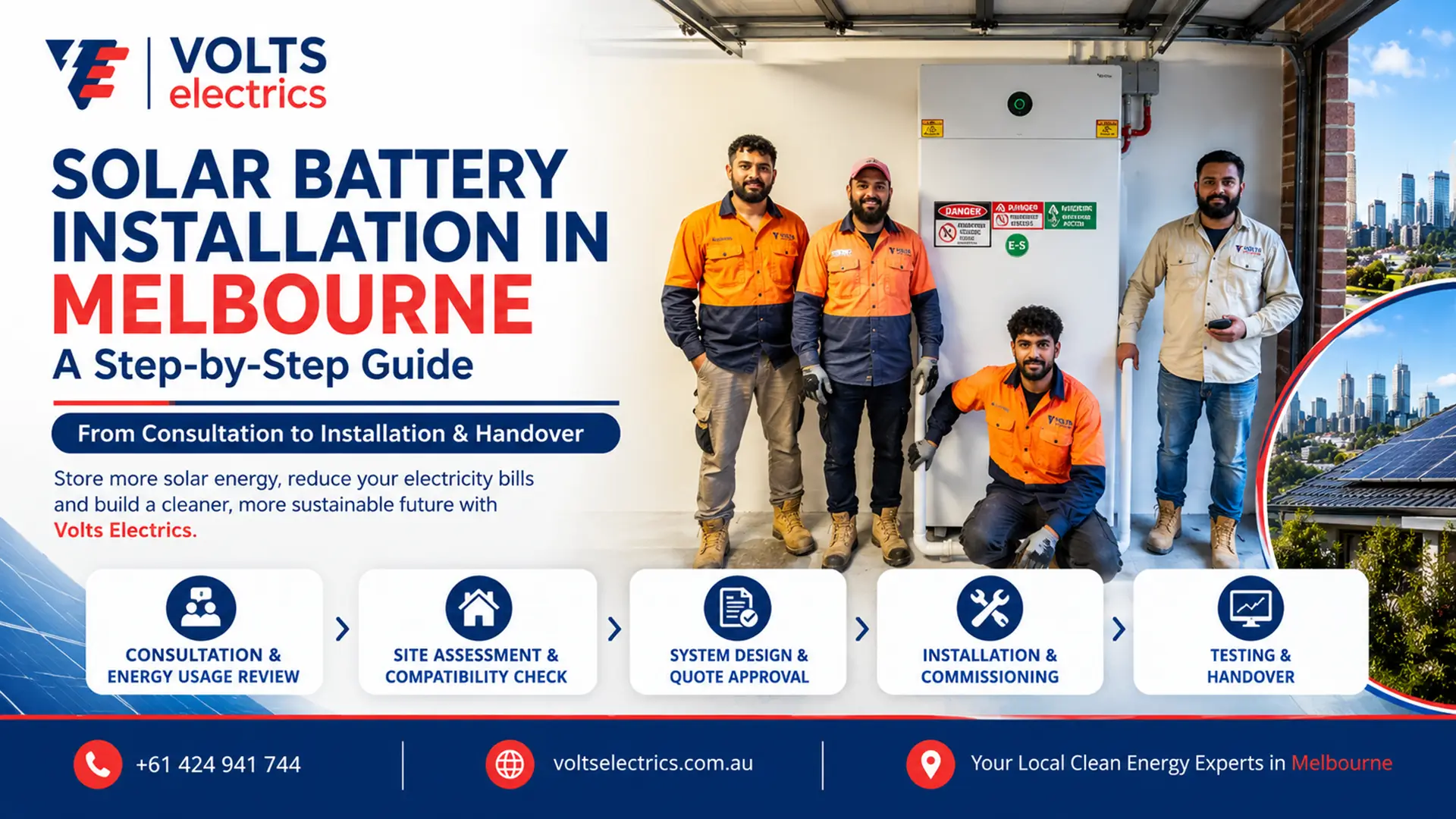
The process is simple when it is planned well. Here is what you can expect.
A good first move is to review your latest electricity bills. They show how much power your household uses and when you use it most. A family that is home during the day may use solar differently from a household that is out at work. Knowing your usage helps you choose a system that suits your needs.
Next, check your roof. The direction of the roof, its angle, the available space and any shade from trees or nearby buildings all affect how much power your panels can produce. In Melbourne, a north-facing roof is usually ideal, but other directions can also work well in the right setup. A professional site assessment gives you a clear picture.
The ideal size for your system is shaped by how much power you use, how much roof space you have and what you want to achieve. A system that is too small may not cover enough of your needs. Going larger than you need may mean spending more than necessary. Our team can help you find a balance that fits your home.
Once you know the system you want, ask for a clear written quote. It should list the panels, inverter, warranties and what the installation includes. A good installer will also walk you through the approvals required, including the application to your electricity distributor. To request a quote, please contact our team and we will gladly assist.
On installation day, the installer fits the mounting frame, secures the panels, installs the inverter and completes the wiring. Solar work involves electricity and roof access, so it should always be done by qualified professionals. After installation, the system is tested to make sure it is safe and working properly.
Last of all, your system is linked to the electricity grid. Your electricity distributor may need to approve the connection before you can switch the system on. After approval comes through, the system is switched on and begins producing your own power. Your installer should also show you how to read your monitoring app.
No two homes have the same solar cost, as each setup is different. Instead of looking only at the upfront figure, it is better to consider what you receive and how it will perform over time.
Several things can change the cost of your installation:
Government incentives may be available to help reduce the cost of solar for eligible households. These programs can change over time, and eligibility rules may apply. We recommend checking the latest details with the relevant government bodies or asking our team to guide you.
The payback period is the time it takes for your savings to cover the cost of your system. It depends on your energy use, your system size and your electricity rates. Many homeowners think of solar as a long-term investment rather than a quick fix. For pricing that suits your home, please contact our team and we will explain your options clearly.
Your installer has a big effect on how your system performs and how smooth the experience feels. Here are a few things to look at.
Make sure the installer is properly licensed and accredited to install solar systems. Ask how long they have been working in the industry and whether they have experience with homes like yours. Experienced installers are more likely to spot roof or wiring issues early.
Look closely at the panels, the inverter and the warranties that come with them. Ask what is covered, for how long, and who you should contact if something goes wrong. A clear warranty gives you peace of mind for years to come.
Customer reviews can tell you a lot about how an installer works. Also ask what support is offered after installation. Good after-sales support means you have someone to call if you have questions about your system.
Solar systems need very little care, but a few simple habits can help them perform well for many years.
Check your panels now and then for dust, leaves, bird droppings or any visible damage. Melbourne rain helps keep panels fairly clean, but a gentle clean may help if dirt builds up. For safety, do not climb onto the roof yourself. It is best to have a professional handle roof access and any inspection work.
Most modern systems come with an app or online portal. Use it to keep an eye on how much power your system produces. If you notice a sudden drop in output that is not explained by the weather, it may be time to have your system checked.
Choosing the right solar system and the right installation team are the two most important parts of going solar. When your system is well sized, correctly installed and properly maintained, it can support your home with clean energy for many years. At Volts Electrics, we help Melbourne homeowners understand their options and move forward with confidence. To learn more about our solar panel installation services in Melbourne, visit our shop today to discuss your home and your energy goals.
Many standard home installations can be completed in about one to two days. The exact time depends on the size of the system and the roof. Grid approval from your electricity distributor can add extra time before the system is switched on.
It depends on how much electricity your household uses, how much roof space you have and what you want to achieve. Looking at your electricity bills is a good starting point. Our team can help you choose a size that suits your home.
In many cases, standard rooftop solar does not need a planning permit. However, some properties, such as those in heritage areas, may have extra rules. It is a good idea to check with your local council before you go ahead. You will also need approval from your electricity distributor to connect to the grid.
Yes, they can. Solar panels still produce power on cloudy days, although the output is lower than on a bright, sunny day. Over the year, a well-designed system can still deliver good results in Melbourne's climate.
Savings depend on your system size, your energy use and the time of day you use electricity. Households that use more power during daylight hours often benefit the most. For a clearer idea of what solar could mean for your home, please contact our team.
Volts Electricals is a team of Solar and Battery Electricians, specializing in designing, supplying and installing solar & battery storage systems.
Join the green revolution with Volts Electrics—your trusted partner in solar energy solutions. We provide professional solar panel installation, reliable maintenance, and energy consultations to help you reduce electricity bills and lower your carbon footprint.
Get exclusive news & offers through our newsletter
Copyright © 2026. All Rights Reserved, Website Designed by Webroot Technologies